Execution essay
How to Build Real Consistency
Real consistency does not feel dramatic. It feels steady, honest, and a little boring.
The struggle usually begins when discipline depends on a breakthrough feeling that cannot be scheduled or repeated.
Where it breaks
When people try to become consistent, they usually overreach. Too many habits. Too many goals. Too much pressure. The plan feels serious for two days, then reality shows up and the whole thing cracks.
After enough failed restarts, consistency starts to feel like something other people have. You stop trusting your own ability to stay with anything.
What the pattern reveals
Consistency grows from behaviors that are easy to see, hard to avoid, and simple to review. Grand plans matter far less than the shape of an ordinary Tuesday.
Useful structure keeps working after motivation cools without turning every miss into shame.
Why it keeps happening
Inconsistency often survives because there is no feedback loop. You miss a priority. You drift for a few days. You get vague discomfort. Then you decide to restart. The pattern repeats because nothing in the system interrupted it early.
That loop is related to why motivation doesn’t last. Emotion creates starts. Structure creates staying power.
A workable response
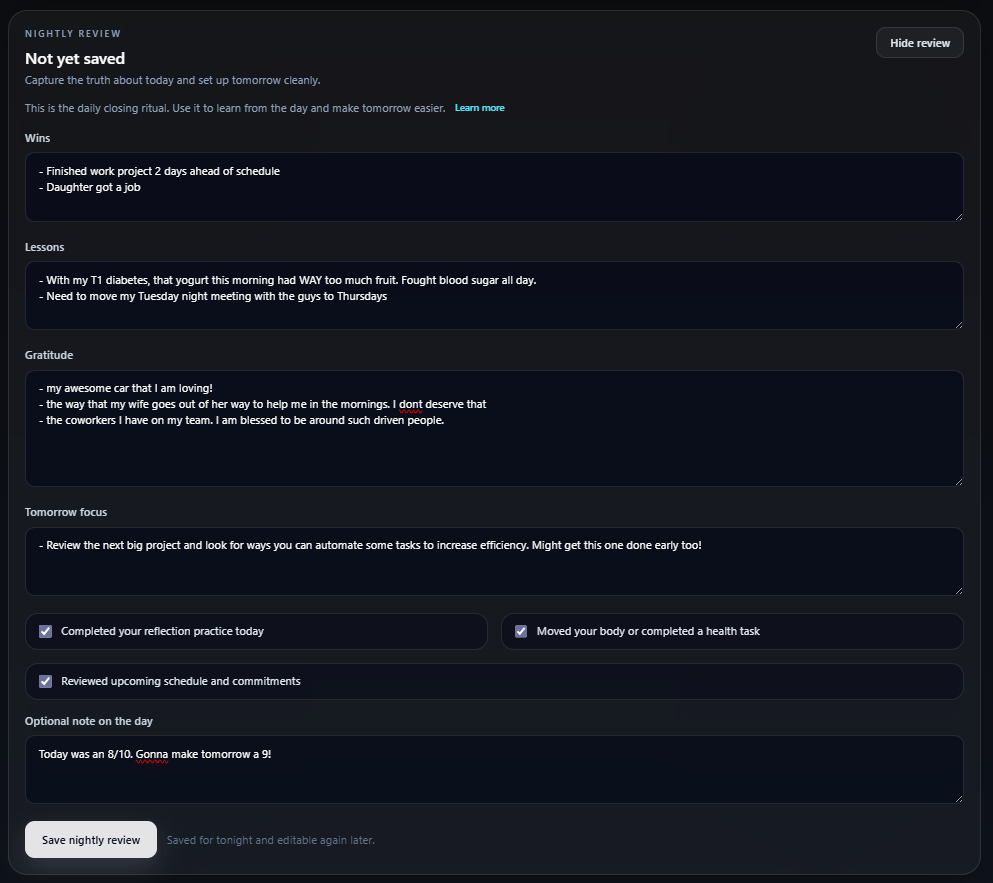
Keep the daily commitment layer small, priorities visible, and the review honest about whether your actions matched your goals. The pattern matters more than the streak.
Review is part of consistency. If you never look directly at what happened, you keep trying to improve in the dark.
Put it into practice
Plan around reality. Keep the active list small, separate future work from today, track the few things that matter, and close the day with enough honesty to learn from it.
Consistency becomes more durable when the day has shape and the review has teeth.
How Outcomes OS supports the work
Outcomes OS was built to make consistency concrete. It combines priorities, recurring execution, daily scoring, and review so your behavior has a visible pattern instead of a vague feeling.
If your specific pain is dropping off after strong starts, read why I start things and don’t finish.